How to Decorate with Metal Wall Art
A practical guide to choosing, arranging and hanging metal prints in your living room, bedroom, home office and small spaces.
A well-chosen piece of metal wall art can make a room feel more personal without a full redesign. The secret is not covering every wall: it is finding the right size, subject, position and balance for the space you actually live in.
Whether you prefer minimalist architecture, historic city scenes or dramatic cyberpunk colour, this guide explains how to decorate with metal prints in a way that looks considered, feels comfortable and works with your furniture. It also covers glossy-surface reflections, safe mounting and arrangements for smaller 20 × 30 cm plaques.
1. Start with the room, not the artwork
The best metal wall art arrangement starts with a simple question: what should the room feel like? A living room might call for a calm focal point; a home office can tolerate a bolder graphic statement. Consider the existing furniture, wall colour, natural light and the space people actually use.
A piece that looks perfect on a product page may feel too small above a long sofa or too visually loud beside patterned wallpaper. Before choosing, photograph your wall from the doorway. The picture helps you judge how the artwork will look as part of the entire room, not only up close.
2. Choose the right size and orientation
Metal art comes in many formats. The key is to choose a composition that suits the available wall area. A wide landscape design often works above a desk, shelf or sideboard, while a portrait piece can be effective on a narrow wall between a door and a window.
Eslaby’s architectural metal plaques are compact 20 × 30 cm pieces. They work particularly well as individual accents in small areas or as part of a coordinated group. One compact plaque will generally not fill a large empty wall above a three-seat sofa on its own.
| Wall area | Practical approach |
|---|---|
| Small desk nook | One 20 × 30 cm portrait or landscape print above the desk |
| Narrow hallway | Two or three vertically stacked or staggered pieces |
| Wide wall or sideboard | Coordinated horizontal row, or one larger artwork |
| Gallery wall | Combine compact metal art with other appropriately sized pieces |
Always measure the physical wall and check orientation before ordering. If you are planning a multi-piece arrangement, lay paper templates on the floor or tape them to the wall first.
3. Match the artwork to your interior style
Metal is a material, not a decorating style. Its look depends on the image, the surface finish and the room around it. Here are four approaches that work especially well with architecture-inspired wall art.
Minimalist and monochrome
Black-and-white facades, staircases and strong geometric outlines look considered beside warm white walls, light wood, concrete and simple furniture. Keep nearby accessories understated so the building’s form remains the focal point.
Industrial and Brutalist
Architecture featuring exposed concrete, repeated windows and angular silhouettes can complement steel shelving, textured fabrics and neutral colours. The trick is to add enough warmth—perhaps a timber desk or soft rug—to keep the room welcoming.
Cyberpunk and colour-forward
Bright magenta, cyan and violet designs work well against charcoal, dark green or deep blue walls. They can also be an intentional accent in a mostly neutral space. You do not need RGB lighting everywhere; one strong colour moment is often enough.
Historic and eclectic
Landmarks, castles and old town views pair naturally with collected books, ceramics, travel souvenirs and vintage furniture. Repeat a colour or material elsewhere in the room to make the combination feel deliberate.
4. Metal wall art ideas for different rooms
Living room
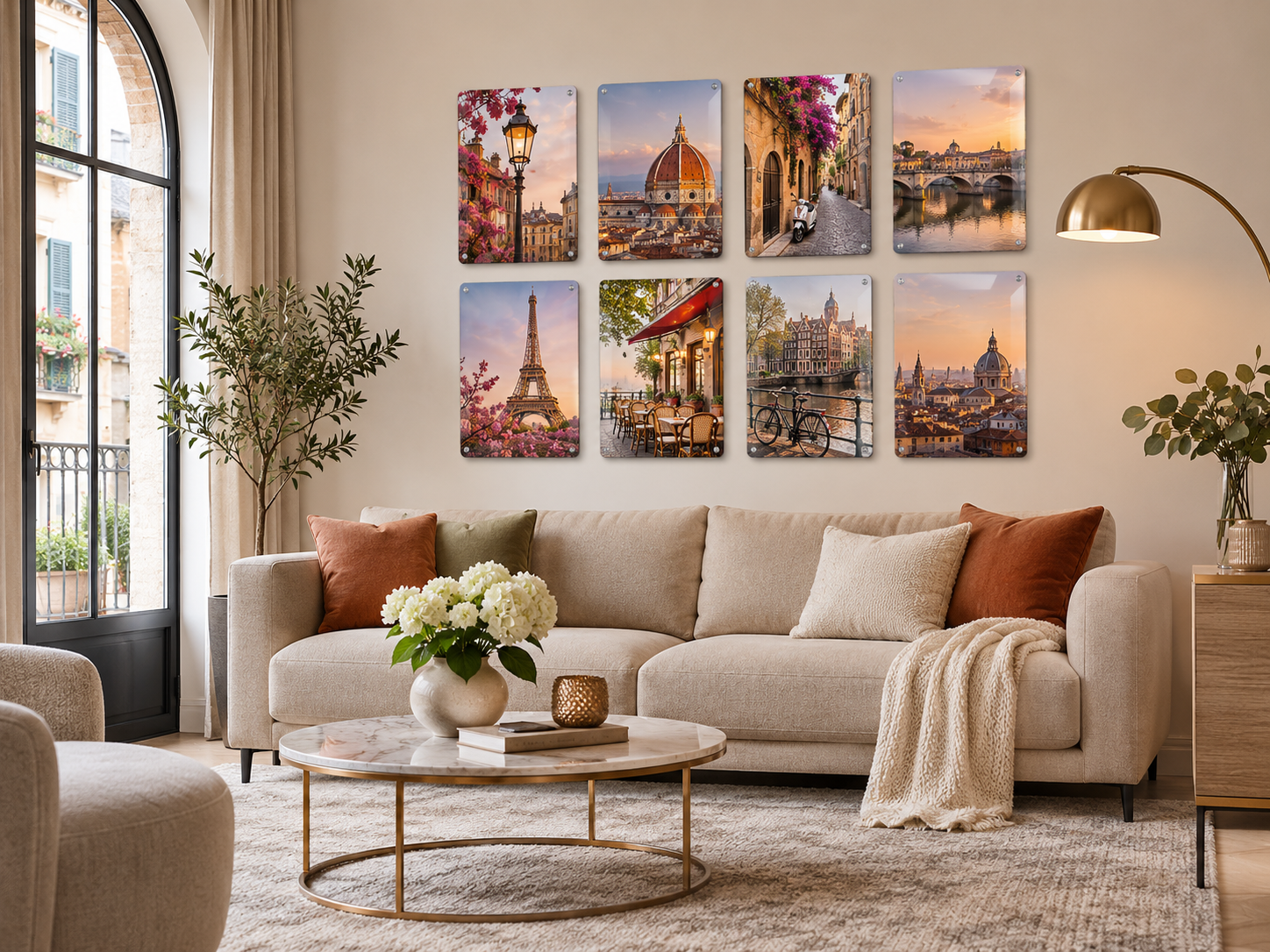
Choose one composition to anchor the seating area. If you have a long wall, treat multiple prints as a visual group instead of spreading them too far apart. A shared theme—one city, a similar colour palette or a common architectural period—makes separate works feel connected.
Bedroom
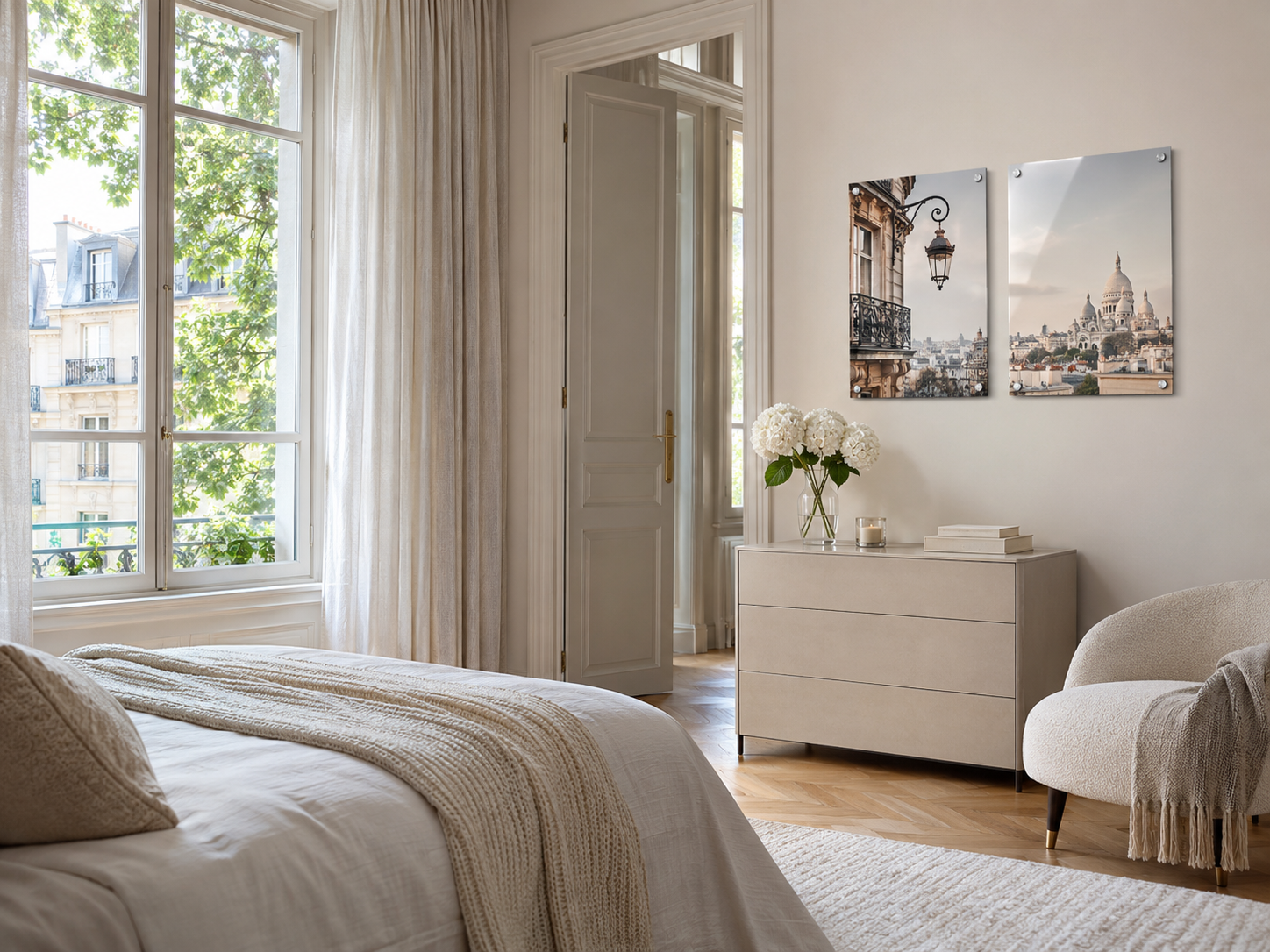
For a quieter effect, choose soft colours or black-and-white architectural images. Avoid visually crowded arrangements where you want a restful atmosphere. For safety, do not position inadequately secured artwork above a bed.
Home office
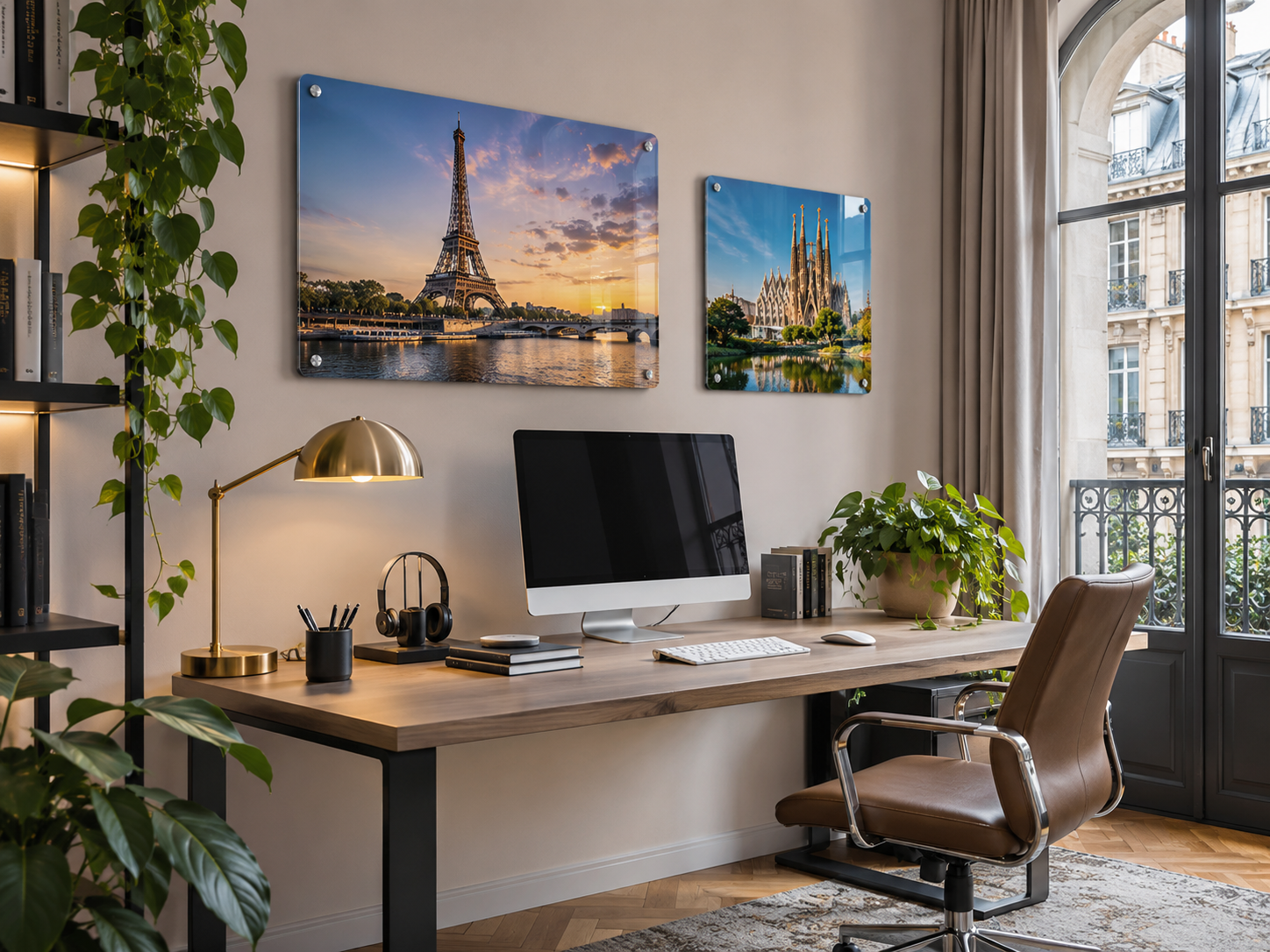
An office is an excellent place for a city that inspires you: a landmark from your hometown, a favourite travel destination or an unusual piece of architecture. Position glossy prints so they do not catch annoying monitor or window reflections.
Hallway and entryway
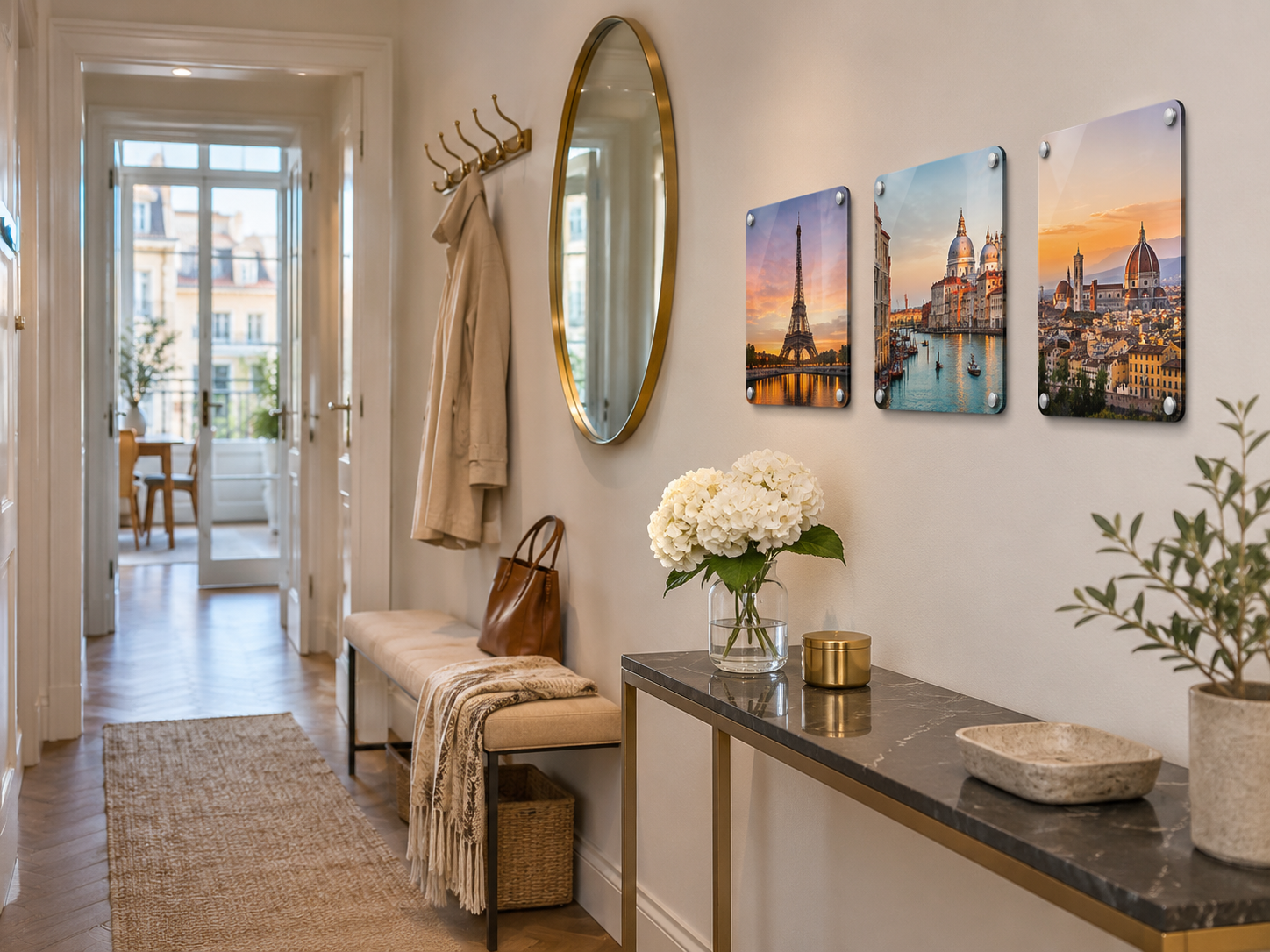
Short walls and narrow spaces are ideal for compact formats. A small series of city scenes can greet visitors without dominating the entrance. Keep the mounting method secure in areas where people may brush against the walls.
Kitchen and dining area
A small architectural print can add colour to a breakfast corner. Avoid placing it directly beside hobs, persistent steam or strong heat. Eslaby plaques are intended as indoor decorative art, not as permanent outdoor or high-heat signage.

5. Create a gallery wall that feels intentional
A gallery wall can make several smaller metal prints feel like one coherent decorative installation. The secret is balance rather than perfect symmetry.
- Choose an anchor piece. Start with a favourite building or city image.
- Find a connecting idea. Use one destination, one palette or one style across the group.
- Plan spacing. As a starting point, try about 5–10 cm between pieces, then adjust to the wall and format.
- Test before mounting. Arrange paper templates or the artworks on the floor and take a photograph.
- Step back. Check the composition from where you usually sit or enter the room.
For a practical visual planning method, see Desenio’s gallery wall guide and IKEA’s picture-hanging tutorial. These offer useful template and arrangement techniques.
6. Work with lighting and reflections
Glossy metal surfaces can make colours and contrast feel lively, but they also reflect bright windows and lamps. Before fixing a position, hold the art in place at several times of day and view it from normal seating angles.
- Try an adjacent wall if direct window glare hides the image.
- Prefer diffused, angled lighting to a very bright lamp directly opposite the print.
- Mix dark and bright compositions carefully so one does not overwhelm the others.
- To support long-term colour stability, avoid prolonged, intense direct sunlight.
You do not need a dedicated picture light for a compact metal plaque. In many interiors, ordinary ambient lighting is enough.
7. Hang metal wall art safely
Before mounting a metal print, inspect its back and check the product’s actual weight, mounting points and any supplied fixing instructions. A wall-safe method for one framed print may not be suitable for an unframed aluminium plaque.
Adhesive picture-hanging strips can be useful in some situations, but only when the manufacturer expressly lists the object, surface and load as suitable. Smooth, well-cured painted walls behave differently from wallpaper, textured plaster or rough concrete. Never assume that adding extra strips increases the rated capacity.
For example, 3M Germany’s official mounting guidance explains surface preparation, waiting times and product-specific weight limits. Follow the exact instructions for the hardware you choose. In a high-traffic location, a secure mechanical fitting may be preferable.
If you are unsure about the backing or whether an adhesive could damage the artwork, ask the seller before installation.
8. Common mistakes to avoid
| Mistake | Better solution |
|---|---|
| Choosing only by the product photo | Measure the wall and compare real dimensions |
| Hanging a compact print too high | Check at eye level from the room’s normal viewing position |
| Mixing too many unrelated colours | Repeat one or two colours or a shared subject |
| Ignoring window glare | Test the glossy surface in the room before mounting |
| Assuming every adhesive works | Check surfaces, weight ratings and backing compatibility |
| Filling every inch of wall | Leave negative space to help each piece stand out |
9. Architecture-inspired metal art from Eslaby
At Eslaby, we create sublimated aluminium plaques inspired by European architecture, city culture and distinctive landmarks. Rather than covering an entire wall, these compact 20 × 30 cm pieces can become carefully chosen details within your space.

Hotel Kyjev — Monochrome
A graphic, restrained option for industrial interiors and neutral home offices.
Explore this artwork →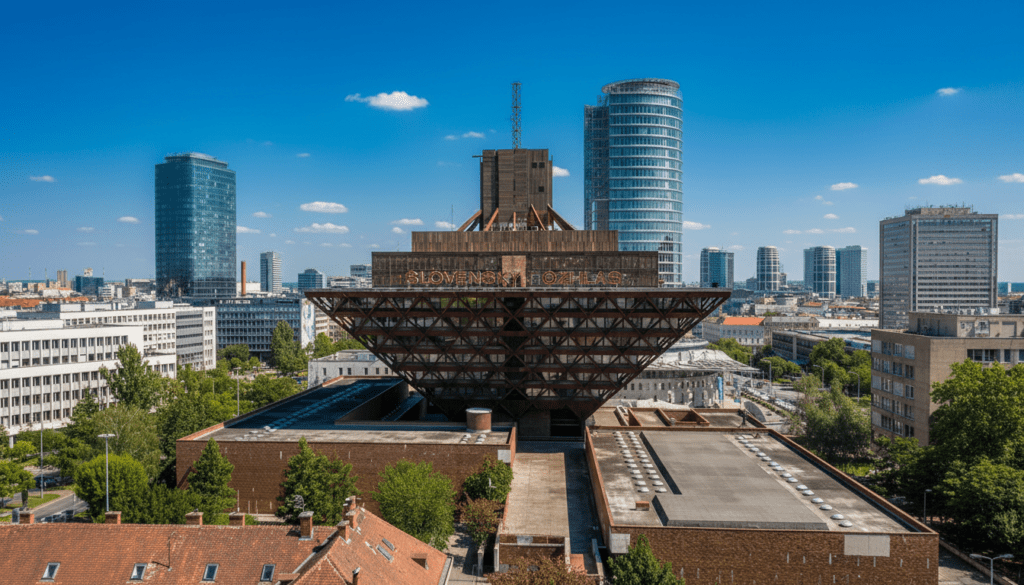
Slovak Radio — Cyberpunk
A dramatic architectural motif for an energetic workspace or gaming setup.
Explore this artwork →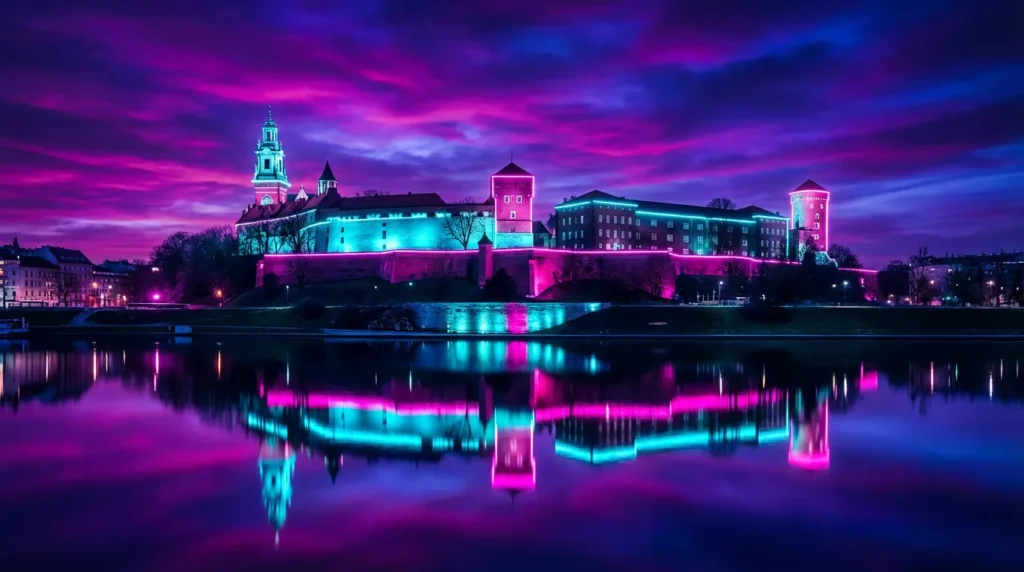
Wawel Castle — Krakow
Historic architecture rendered as striking wall decoration for a reading corner.
Explore this artwork →
Prague Astronomical Clock
An atmospheric city detail for interiors with colour, character and travel memories.
Explore this artwork →Explore more locations and aesthetics in the Eslaby city collections or browse the metal plates collection. Choose a place you recognise, a building you admire or a visual style that works with the room.
10. Keep your artwork looking good
For routine cleaning, gently remove dust with a soft, clean microfibre cloth. If necessary, use a slightly damp cloth and dry the surface with another clean cloth. Avoid abrasive sponges and aggressive cleaning agents, which can scratch or affect the coated finish.
Treat the edges carefully when moving or rearranging a plaque. Store unused pieces in a dry place, separated by soft protective material so the surfaces do not rub against one another.
Interested in how the material differs from a traditional print? Read our guide to metal prints versus paper posters in Eslaby Journal when it is published.
Frequently asked questions
Where should I hang metal wall art?
Try a living-room feature wall, hallway, reading corner or home office. The best position depends on scale, daylight and the room’s existing furniture.
Can I mix metal prints with paper posters?
Yes. Create a visual connection using common colours, themes or an even layout. Mixing finishes can create depth, but pay attention to how glossy and matte surfaces catch light.
Is 20 × 30 cm too small for a living room?
Not necessarily. It works well as a small accent or within a group. Above a large sofa, one compact print may look undersized, so consider a gallery arrangement or a larger focal piece.
Can I use adhesive strips on a metal plaque?
Only when the specific mounting product is compatible with the plaque’s backing, its weight and the wall surface. Follow the manufacturer’s instructions and contact the seller if unsure.
How do I avoid glare on glossy metal prints?
Test the print against your room lighting before fixing it in place. Avoid facing strong windows directly and consider gentle, angled lighting.
Can metal wall art be displayed outdoors?
Some specialist products are designed for outdoor display, but this does not apply to every metal print. Eslaby’s current decorative plaques are intended primarily for indoor use.
Make Your Walls Feel Like Your Own
Find a landmark that brings back a memory, a shape that fascinates you or a city worth celebrating. Start with one meaningful piece and build the room around it.
Explore Eslaby City Art →