Janko Hraško: The Little Pea Hero
Discover the beloved Slovak fairy tale of a boy as small as a pea, whose bravery and cleverness make him greater than anyone expects.
What could a child no bigger than a pea possibly do in a world of oxen, rivers, travellers and kings? Quite a lot, according to the Slovak folk tale Janko Hraško. Known in English as Johnny Little Pea, this small hero overcomes obstacles with an enormous personality and a talent for making everyday objects do extraordinary things.
Below is an original English retelling inspired by the traditional story preserved in Slovak folklore, paired with eight illustrations from Eslaby. The final two scenes broaden the classic tale through artistic imagination; we distinguish those additions from the recorded tradition.
Who Is Janko Hraško? Origins of a Slovak Fairy-Tale Hero
Janko Hraško is a Slovak folk-tale character whose name evokes a pea-sized boy. He belongs to a broader family of European stories about unusually small heroes, but his adventures are rooted in rural Slovak life: a family cottage, ploughing fields, food carried to a father and encounters with strangers on the road.
The collector and writer Pavol Dobšinský (1828–1885) included the tale in Prostonárodné slovenské povesti, his influential collection of Slovak folk narratives published in the nineteenth century. The digitised text credits Janko Kalinčiak from Svätý Ján in Liptov as the person who supplied the tale in local speech. That attribution is an important reminder that this story emerged from oral tradition rather than from one inventor’s imagination.
The character remains familiar in Slovak publishing. A Slovak-English collection of tales appeared in 2001, and modern illustrated editions still introduce Johnny Little Pea to new readers. The Slovak Literary Centre documents the bilingual edition, while the IBBY Europe catalogue describes a later illustrated retelling.
The Story of Janko Hraško — Told in Eight Illustrated Chapters
Follow Janko from the warmth of his family’s kitchen to rivers, fields and adventures in the wider world. Each illustration has its own Eslaby metal-art edition.
A Pea-Sized Miracle
A tiny voice in the kitchen
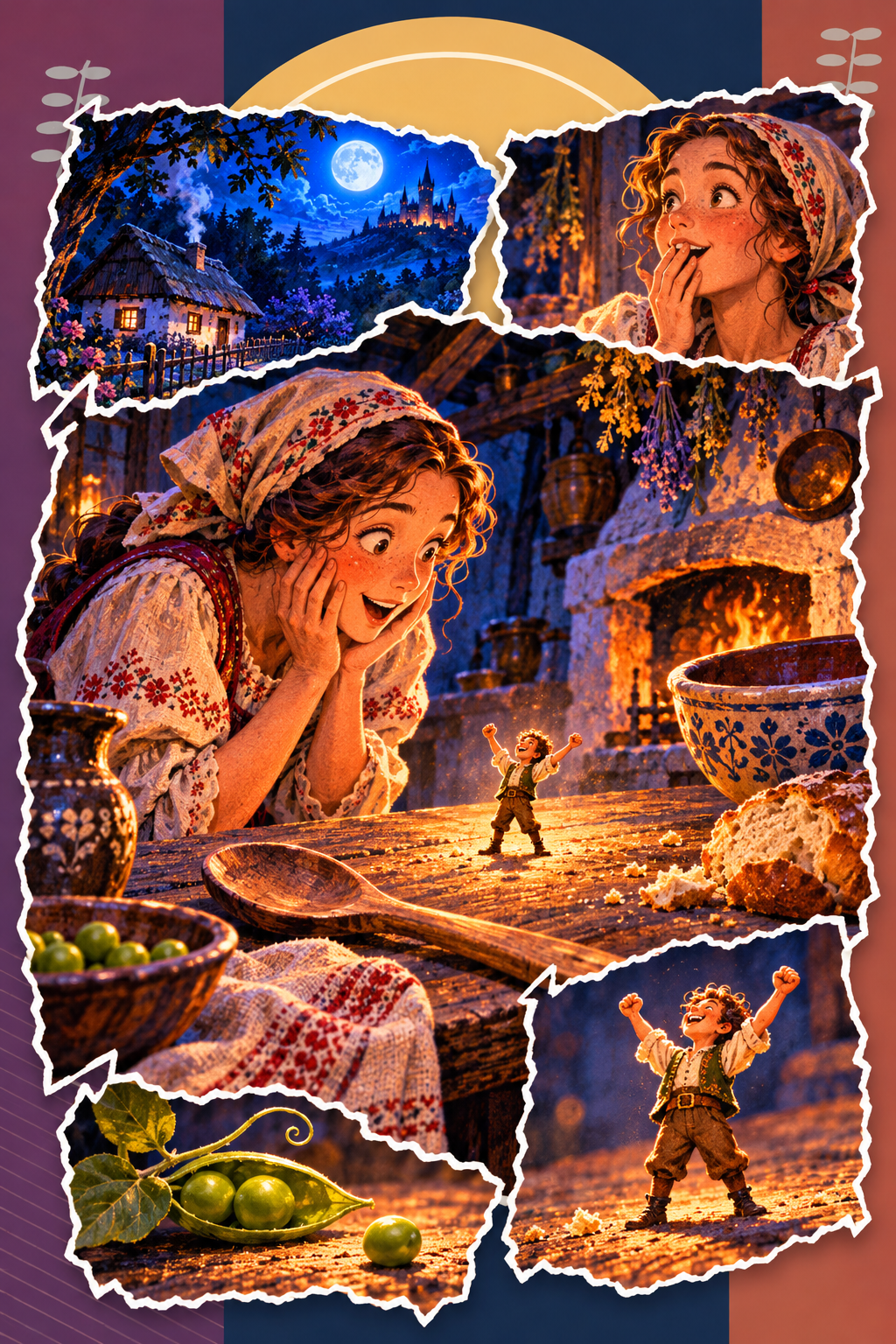
A farmer and his wife had long wished for a child. One day, as the woman worked with peas, she wished that she might have a son, even if he were no bigger than a single pea. Her wish seemed impossible—until a cheerful voice answered her from near the stove.
On the kitchen table stood a boy so small that an ordinary spoon looked enormous beside him. He had bright eyes, a lively spirit and a name that suited him perfectly: Janko Hraško, or Johnny Little Pea. His mother was astonished, but her surprise quickly turned into affection. The tiny visitor was her own son.
Far from being frightened by the size of the world, Janko immediately volunteered to carry lunch to his father working in the fields. His mother could scarcely imagine how a child this small could manage such a task. Janko, however, had already begun making plans.
The Little River Voyager
A spoon becomes a boat
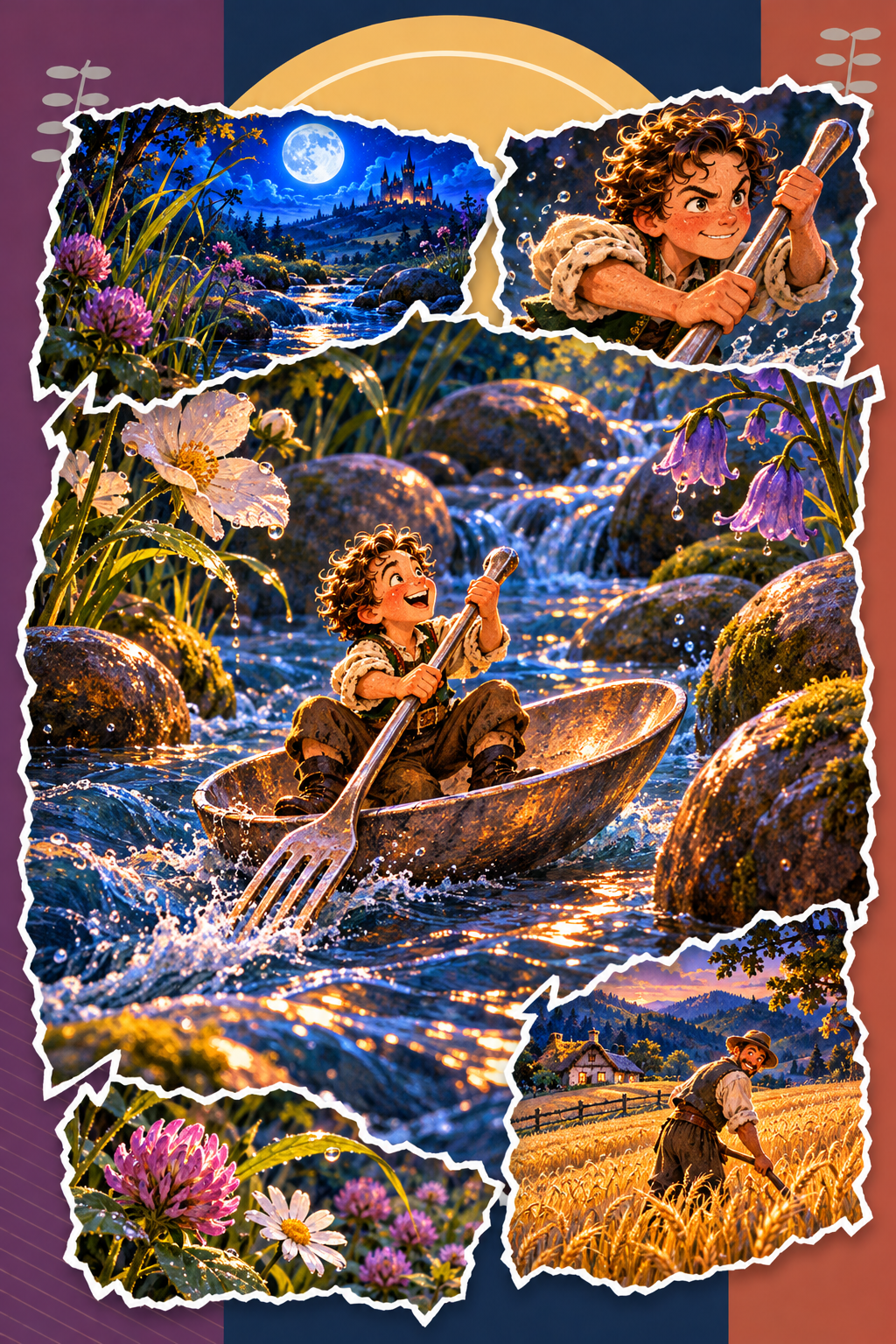
With food for his father, Janko set out across the countryside. Every stone looked like a boulder and every patch of grass like a forest. When he reached a stream, the water was far too wide for his little legs.
Instead of turning back, he settled into a spoon and used a fork like an oar. The crossing was his first great lesson in ingenuity: the same household objects that served ordinary people could become an entire fleet for a pea-sized traveller.
Not everything went smoothly. In Dobšinský’s recorded tale, Janko stumbled, lost the soup and had to find a way out of a ditch. But he kept going, determined to reach the field despite mishaps that would have seemed trivial to anyone else.
The Smallest Farmhand
A voice among the oxen
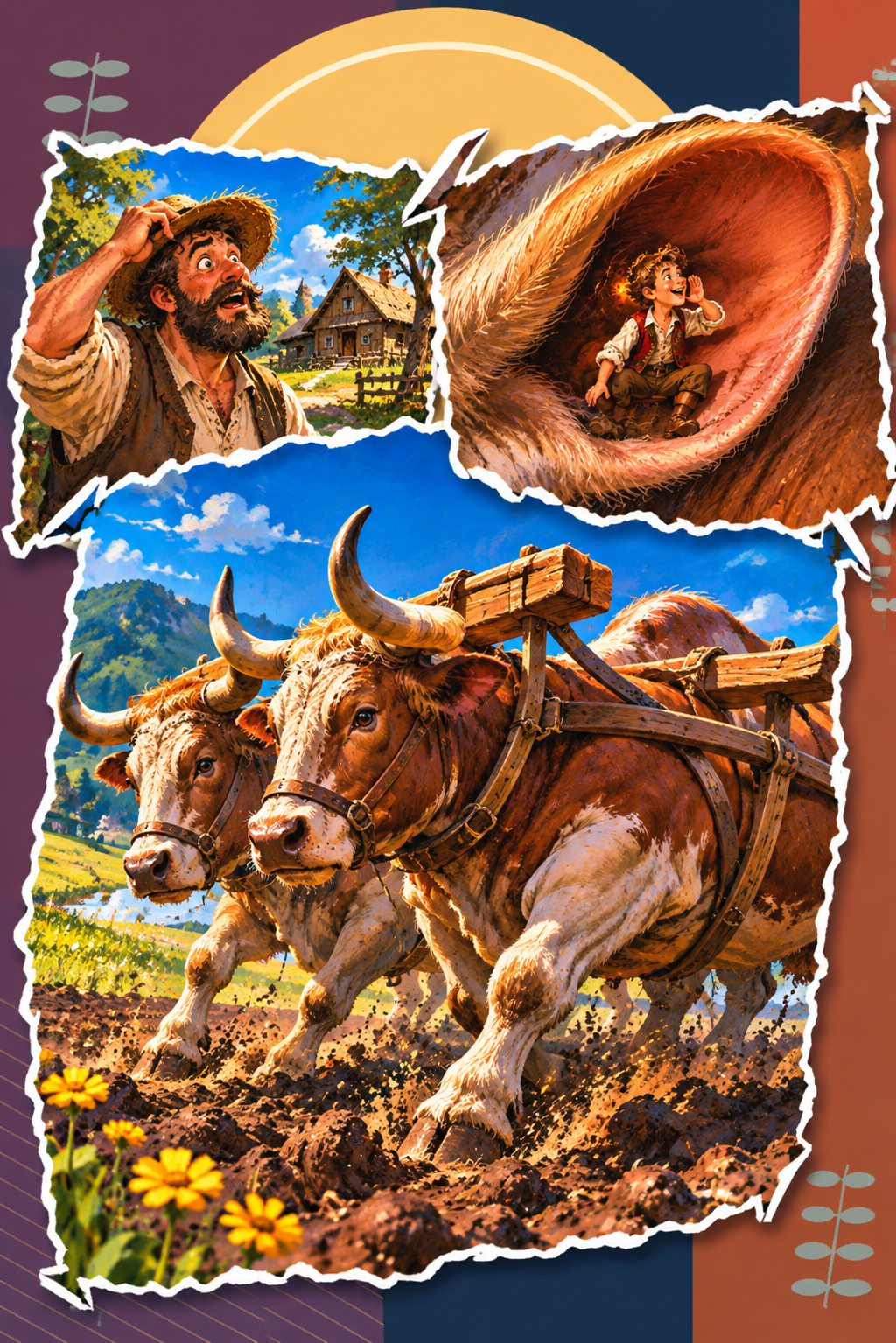
When Janko reached his father, the farmer could hardly believe the tiny boy was his son. Before long, though, the surprise gave way to delight. Janko was not asking to be carried around; he wanted to be useful.
While the farmer ploughed, Janko climbed into an ox’s ear and called out directions. The animals obeyed the voice, even though no one could see who was giving the orders. To a passer-by, it appeared that the oxen were being guided by magic.
In this scene, Janko’s greatest strength is not physical power but confidence and quick thinking. He knows how to make himself heard in a world that is much larger than he is.
The Hidden Passenger
The traveller and the bag of coins
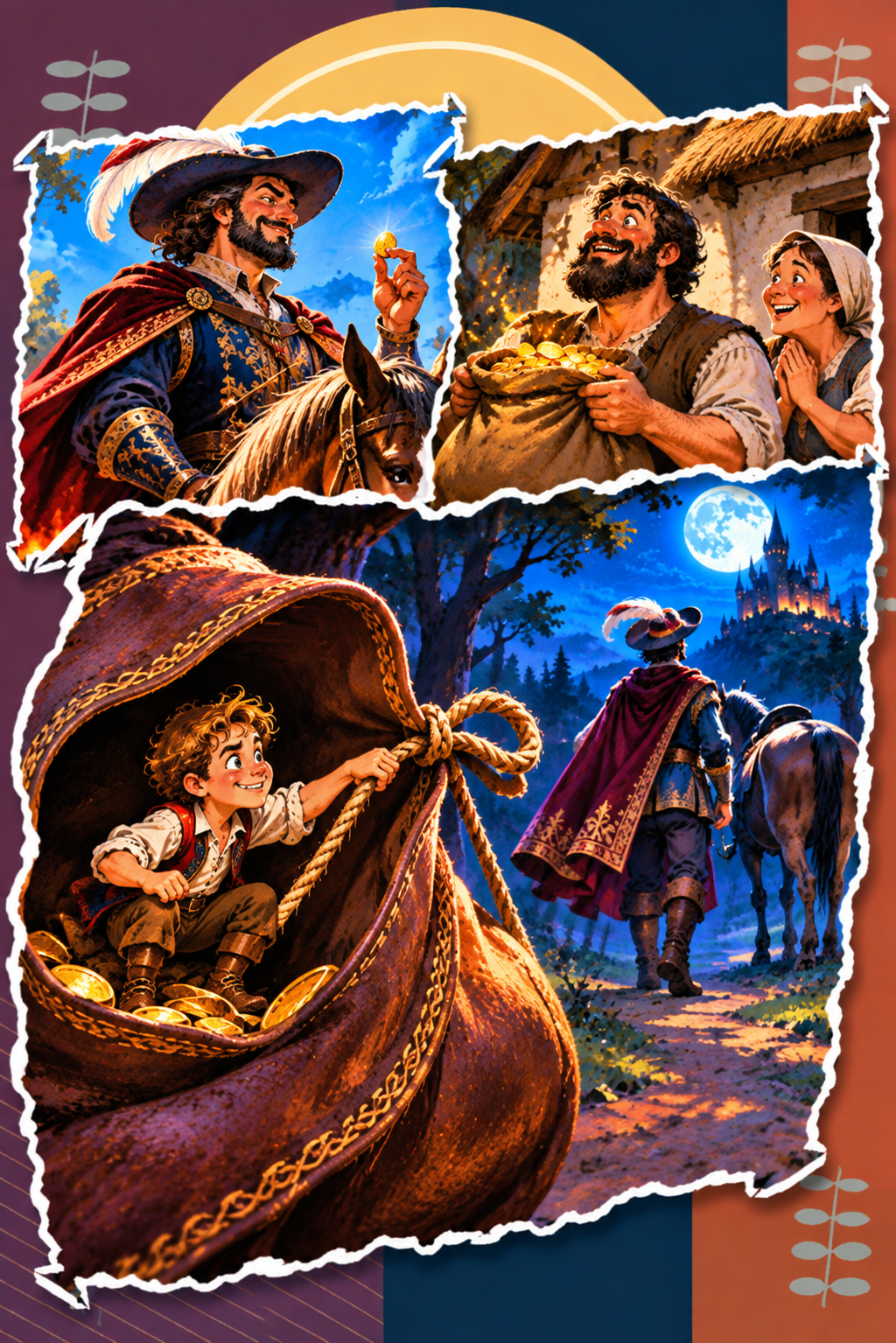
A wealthy traveller passing the field was fascinated by the invisible helper. He offered the farmer money to take the little boy away. Janko whispered to his father that he had a plan and would find his way home.
The traveller tucked Janko into a container among coins and set off on horseback. But Janko had a tiny knife and a sharp idea. He made a hole through his hiding place, letting the coins fall one after another along the road.
Following the scattered trail back, Janko returned to his parents with the money. The scene is mischievous rather than solemn: the supposedly powerless boy outwits a rich man who thought he could carry him off like a curiosity.
Small Steps, Great Adventures
Beyond the family cottage

In the recorded story, further trouble comes when the traveller sends men looking for Janko. Once the danger passes, the little hero decides that his parents can now live comfortably. The wide world calls to him.
He leaves the cottage behind and follows paths beneath great trees, across hills and into unfamiliar country. To an ordinary traveller, these are roads and woods; to Janko, they are landscapes of vast proportions where even a pebble can become an obstacle.
This illustrated chapter captures that turning point. It is not one exact passage from the old text, but a visual bridge between Janko’s home life and the bold adventures that follow.
A Tiny Hero’s Great Feat
Courage before a rough company
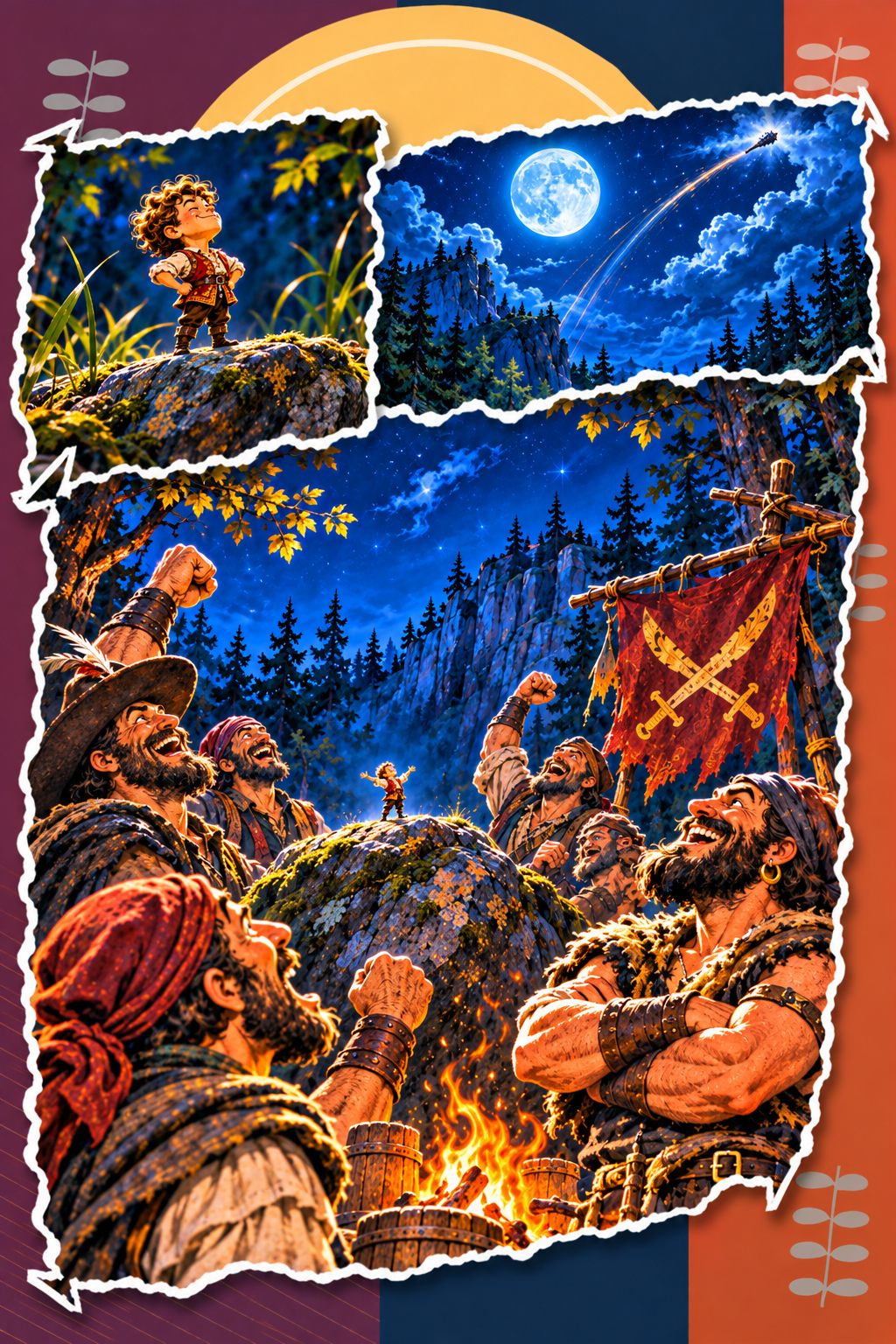
Beyond home, Janko meets men who are much bigger and rougher than he is. In older tellings, his travels lead to startling displays of strength and daring, with heavy objects and outsized challenges that seem impossible for a boy his size.
The men laugh at first. Yet Janko is never intimidated by laughter. He turns their assumptions against them and proves that a small figure can create an enormous surprise.
Our illustration brings this moment into a lively moonlit gathering with a dramatic feat of strength. The exact composition is Eslaby’s artistic interpretation, inspired by the hero’s boldness rather than a literal picture of one historical sentence.
Courage Before the Crown
An imaginative encounter at court
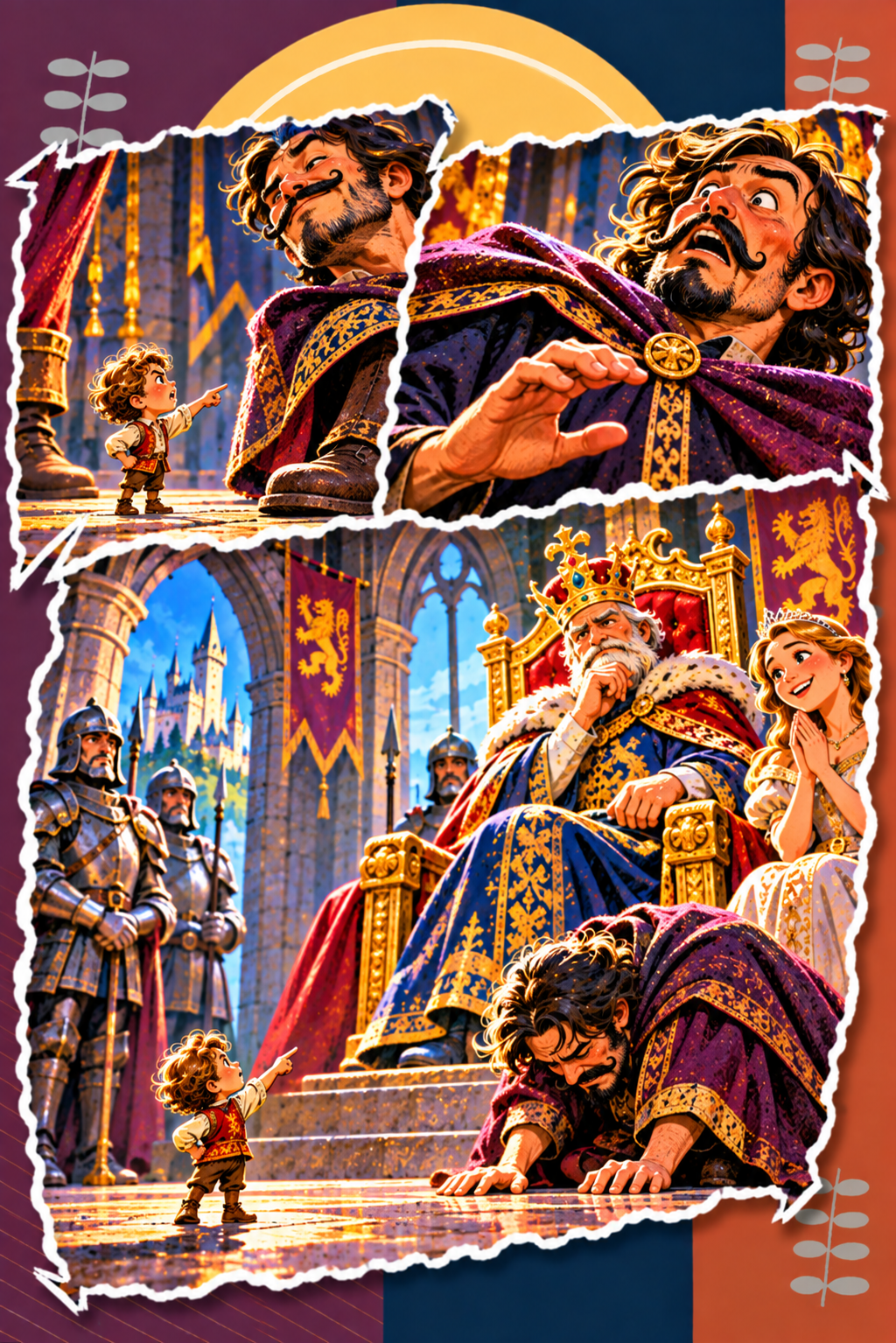
Imagine Janko entering a royal hall, where guards in polished armour stand beside towering columns and richly dressed courtiers look down at him. Some smile at his height; others do not notice him at all.
But Janko does what he has always done. He speaks firmly, meets the powerful on equal terms and refuses to let their rank define his worth. The court gradually realises that the smallest guest may be the bravest person in the room.
This is an added illustrated episode in Eslaby’s eight-scene retelling—not a scene presented as part of Dobšinský’s original account. It extends the fairy tale’s recurring idea that courage and cleverness matter more than appearances.
A Hero Transformed
A celebratory illustrated finale
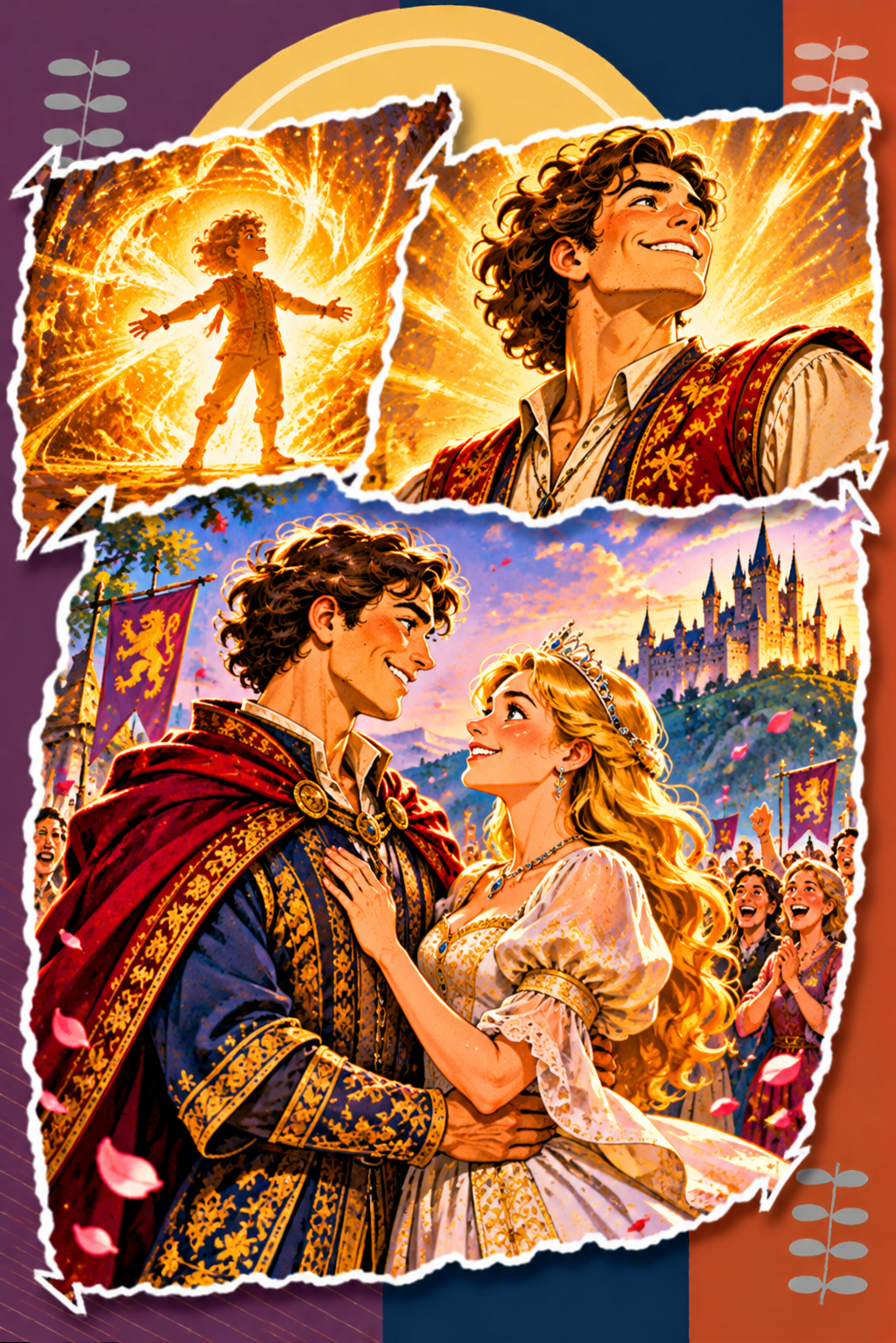
For the last illustration, we imagine a fairy-tale celebration: golden light, a castle, a smiling princess and a transformed Janko welcomed with cheers. The tiny adventurer who began life on a kitchen table now stands at the centre of a magnificent scene.
This romantic transformation is a creative ending designed for Eslaby’s artwork. It should not be confused with the conclusion of the traditional story collected by Dobšinský, whose surviving versions follow a different course.
As a symbolic conclusion, however, the image makes the point visually: someone overlooked because of their size may still find dignity, love and a place in the world. That is what makes Janko Hraško such an enduring little hero.
What Does Janko Hraško Teach Us?
At first glance, the story is playful and full of improbable events. Under its humour lies a simple, enduring message: being small does not mean being powerless. Janko survives because he observes closely, changes his approach and makes creative use of the objects around him.
The farm scenes also celebrate practical intelligence. A spoon becomes a boat, an ox’s ear becomes a place from which to guide a plough, and a trail of coins becomes a path home. This inventive use of ordinary things is one reason the story still feels lively rather than remote.
There are less comfortable aspects too. The traditional account includes an adult offering to take Janko away in exchange for money. Rather than hiding these moments, reading them with context shows how older folk tales could mix humour, danger and moral ambiguity. Different modern versions may soften or rearrange them for younger audiences.
Traditional Tale, Modern Retellings and Eslaby’s Eight Scenes
Oral tales do not always have one fixed version. Dobšinský’s recorded text, later children’s editions and contemporary illustrated adaptations differ in wording, emphasis and sometimes even in the events they include. We have used the historical narrative as our main source, while allowing the Eslaby artwork to create a visual journey of its own.
For that reason, the court confrontation and princess transformation in chapters 7 and 8 are best understood as imaginative extensions to the Eslaby illustration series. They are not evidence that the original folk tale ended with a royal wedding. Readers interested in the older text can consult the digitised original linked below.
If the illustrations catch your eye, visit the complete Janko Hraško collection at Eslaby, where each scene is available as a decorative 20 × 30 cm metal print.
Frequently Asked Questions
What does Janko Hraško mean in English?
The name is commonly rendered as Johnny Little Pea. It evokes the hero’s extraordinary size: a boy no bigger than a pea.
Is Janko Hraško a Slovak fairy tale?
Yes. It is part of the Slovak folk-tale tradition, preserved in written collections and retold in books for generations.
Who wrote Janko Hraško?
Rather than having a single original author, the story comes from oral tradition. Pavol Dobšinský collected and adapted Slovak tales, and his printed version credits Janko Kalinčiak from Liptov as the source for this one.
Is Janko Hraško the same as Tom Thumb?
They share the widespread European motif of a remarkably small hero, but their stories are not identical. Janko’s tale has its own rural Slovak setting and particular episodes.
Does the original tale end with a princess?
Not in the traditional text used here. The princess and transformation artwork is Eslaby’s creative finale, not a claim about Dobšinský’s ending.
Where can I read the original Slovak story?
The Zlatý fond digital archive provides the historical Slovak text.
Sources & Further Reading
These resources document the historical text, publication history and continuing cultural significance of Janko Hraško:
- Zlatý fond SME — Janko Hraško: digitised text of Dobšinský’s collection, including the attribution to Janko Kalinčiak.
- Oxford Handbook of Slavic and East European Folklore — Slovak Tales and the Collections of Pavol Dobšinský: scholarly context for how Dobšinský collected and reshaped oral narratives.
- Slovak Literary Centre — Johnny Little Pea and Other Slovak Folktales: catalogue entry for a bilingual edition.
- IBBY Europe — Janko Hraško: information on a modern Slovak children’s edition.
- Buvik — Janko Hraško: Slovak publisher’s page for a later illustrated edition.
